Christmas festival
 Christmas in Sri Lanka is celebrated in the true Lankan style. Although the majority of Sri Lankan population in Buddhists and Christians make up only 7% of the total population of the country, Christmas in Sri Lanka is celebration with great enthusiasm. The first sign of Christmas celebrations in Sri Lanka dates back to many centuries, when Sri Lanka (Ceylon) was ruled by Portuguese from 1505 to 1650 AD, followed by the Dutch and the British who ruled Sri Lanka from 1658 to 1796 and 1815 to 1948, respectively. Here are some more interesting facts about Christmas celebrations in Sri Lanka.
Preparations for Christmas in Sri Lanka start several weeks prior to the festival. The festive sound of firecrackers at the dawn of December 1st is the first sign of intimation that Christmas in round the corner. This is the time when every Christian household in the country performs the first ritualistic task of the festive season. Christmas spirit can be seen everywhere- from small wayside boutiques to huge shopping centers during the celebration of Christmas in Sri Lanka. Christmas tree are beautifully decorated and lit up in most of the shopping complexes and every Christian household in the country.
Deepavali Fesitival
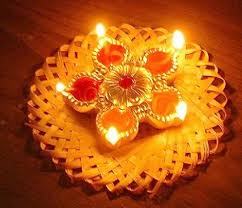 Deepavali Festival is mostly celebrated by the Sri Lankan Tamils. Deepavali is also known as Diwali in both India and Sri Lanka. Deepavali Festival means many rituals and lighting off small lamps to banish off all shadows from one’s house and life. It is also termed as the Festival of Lights. This festival has a sublime significance, for it symbolizes the victory of good forces over evil forces. The lamps are symbolic of this celebration and hope for an bright and prosperous future. Fireworks are add to the glow and color and aura of the festival. In India, the northern part calls it Diwali and the southern part of the country knows this festival as Deepavali. As Sri Lankans Hindus (mostly Tamils), follow mainly the customs of South India, Festival of Lights is known as Deepavali Festival on the island too.
More image
Ramzan festival
 Ramazan, which ends during April, is a month in every 2year set aside for fasting, a religious obligation compulsory for very devout follower of Islam.In this month, with the coming of every dawn, not a morsel of food, liquid or solid, will pass the lips of a Muslim observing the first, until the sun sets over the horizon. In this period, while going about his activities a Muslim is expected to devote his time to prayer and meditation.In Sri Lanka it is not unusual to see large groups of people gathering at the doorways of mosques around the country. Muslims are clearly identifiable by there white lace caps or with a handkerchief covering their heads and kept in place with a knot tied at the back. You can also see them hurrying in the half light of the approaching dawn for the subah or the first prayer of the day. Usually it is just before this prayer that Muslims partake of the only meal for the day. breaking their fast after magrib, the evening prayer. This ritual will go on for 30 days.
During this time, in the evenings after prayers, it's not unusual to see people gathering on the Galle Face Green eating ice cream and relaxing after their day's fast.
Muslim homes are a hive of activities in the evenings; many inviting their friends and relatives to partake of the breaking of the fast with them. A delicious selection of sweetmeats will be on the table for the children but it seems to hold a fascination for many an adult as well.
Another common sight is the movement of small groups of people, usually composed of women and children, asking for alms. this is because it is compulsory for every Muslim to give alms during the month of Ramazan.There are two forms of charity at this time; sadaquat-ul-fitr which is where the rich give food to the poor and zakat-ul-mal where they give one third to one tenth of the value of their property like gold, silver, flocks or grain.
More image


Vesak Festival
 Vesak, the most important day in the Buddhist calendar around the world, celebrates the birth, enlightenment and passing away of Gautam Buddha. Its significance lies in it being associated with the Buddha and His universal message of peace. Though festivals were celebrated since long around the time around which Vesak is celebrated today, yet, the formal decision to mark it as the Buddha Day was taken at the first Conference of the World Fellowship of Buddhists (W.F.B.). This conference was held at Sri Lanka in 1950 and the resolution adopted here read,
"That this Conference of the World Fellowship of Buddhists, while recording its appreciation of the gracious act of His Majesty, the Maharaja of Nepal in making the full-moon day of Vesak a Public Holiday in Nepal, earnestly requests the Heads of Governments of all countries in which large or small number of Buddhists are to be found, to take steps to make the full-moon day in the month of May a Public Holiday in honour of the Buddha, who is universally acclaimed as one of the greatest benefactors of Humanity.


Temple of the tooth (Dalada Maligawa) - Kandy
 The Sacred Tooth Relic, which is housed at the Dalada Maligava in Kandy , is the most precious and venerated object for Buddhist in Sri Lanka . It is treated with the same reverence and dignity as a living Buddha.
The Tooth is believed to be a left incisor of the Buddha. It is said that Khema Thera retrieved this relic from the Buddha's funeral pyre and handed it over to King Bambadath of Dantha, Kalinga. It continued to be honoured and venerated under the many kings that followed. During the era of King Guhaseeva, a king of neighboring city waged war to claim ownership of the relic. Guhaseeva, who was fearful of the Sacred Tooth Relic falling in to enemy hands, instructed his daughter Princess Hemamala and her husband Price Dantha to smuggle it to Sri Lanka . So the relic arrived in Sri Lanka hidden inside the Princess' hair and was handed over to Bhikku residing at Meghagiri Vihara. The Bhikku informed then the king of Anuradhapura , Krithisena Mevan of it , and the king received the Tooth Relic with much pomp and pageantry and built special premises to house it.


It remained in Anuradhapura for over 700 years and removed to Polonnaruwa when the kindom saw a foreign invasion. The relic was moved each time a new kingdom was established and special premises were built to accommodate it. It moved from Anuradhapura to Polonnaruwa and thereafter to Dmbadeniya, Kurunegala, Gampola, Sri Jayawardenapura and Kotte before making its way to Kandy .


